Anonymised operating proof
Invoice processing that catches banking-detail fraud before it pays out.
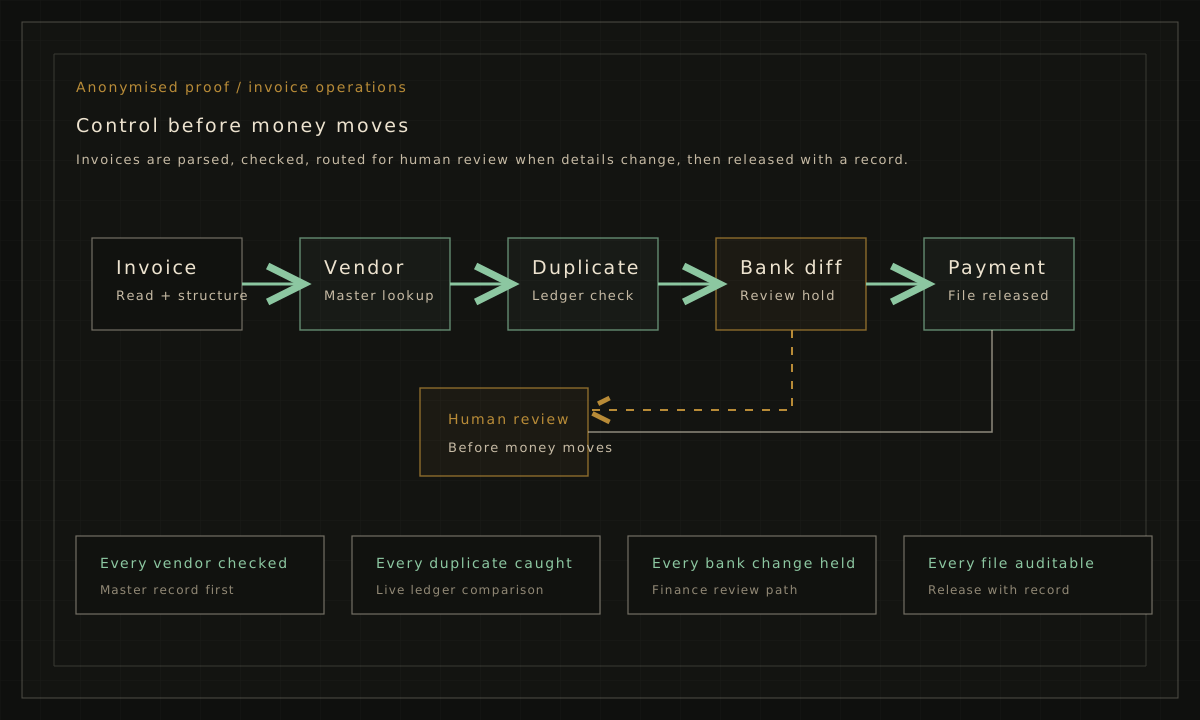
- Every invoice read and structured before payment
- Every payment file built only after verification
- Banking-detail changes always go to a human first
Portfolio-grade operating work for growing businesses
I am an ex-Portfolio Director from a leading Asian private equity firm: 13 years, 22+ portfolio companies, and roughly USD 2B aggregate enterprise value across ASEAN, Australia-New Zealand, North Asia, and Europe. I now apply that operating discipline to growing owner-operated businesses across ASEAN and ANZ.
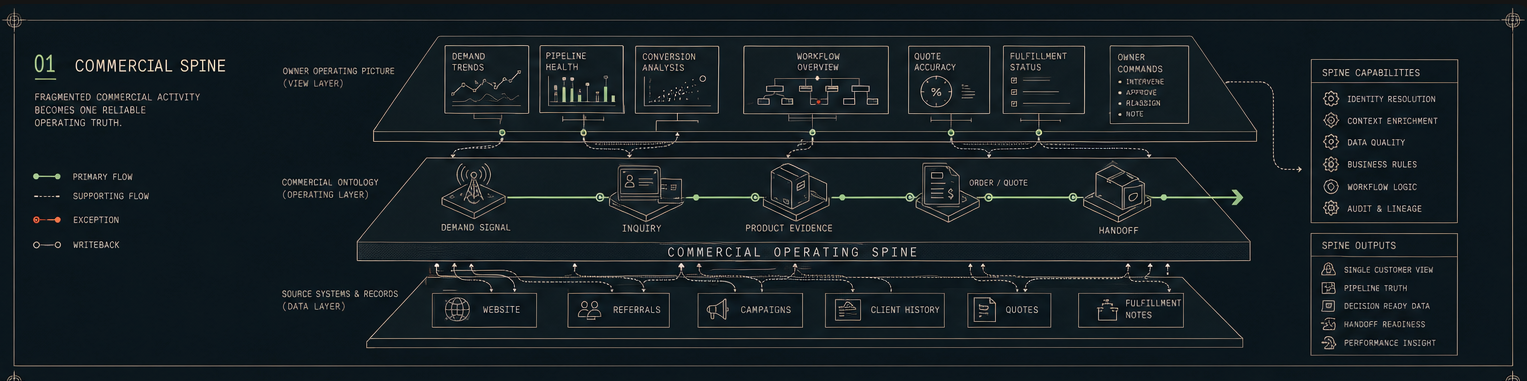
On the work right now: a quarterly engagement with a US manufacturer-distributor (Malaysian parent). Already shipped brand identity, new public website, full SKU catalogue, the foundation of a commercial operating system that routes web and email enquiries straight to fulfilment, plus demand-sensing from search analytics, market data, and the industry registry, plus channel strategy. Built single-handed. Plus continuing relationship support for a premium 13-outlet SG F&B group whose owner now reads outlet-level margin every morning, not weeks late. Phase 2 (supplier AP into the accounting system) is now run by the team without me.
erchoo.com / Regional: ASEAN + ANZ / 4 engagements per quarter / From USD 4,000 per month

Relationship support / client-autonomous
Outlet revenue and discount data used to land on the owner desk two to three weeks after the fact, long after suppliers had already repriced. Margins are thin in F&B, and the data was too old to act on.
Per-outlet ingestion now reads operator emails overnight, extracts revenue and discount-by-department data, builds a three-period view per outlet, and drops a clean reconciled file into the finance workspace every night. The owner starts the morning on yesterday data, not last month data.
Phase 2, supplier AP keyed into the accounting system, is now run by the client team without us.
See the case study
More operating proof
Confidential / anonymised
Anonymised operating proof
Forward-Deployed Operator
Why this approach
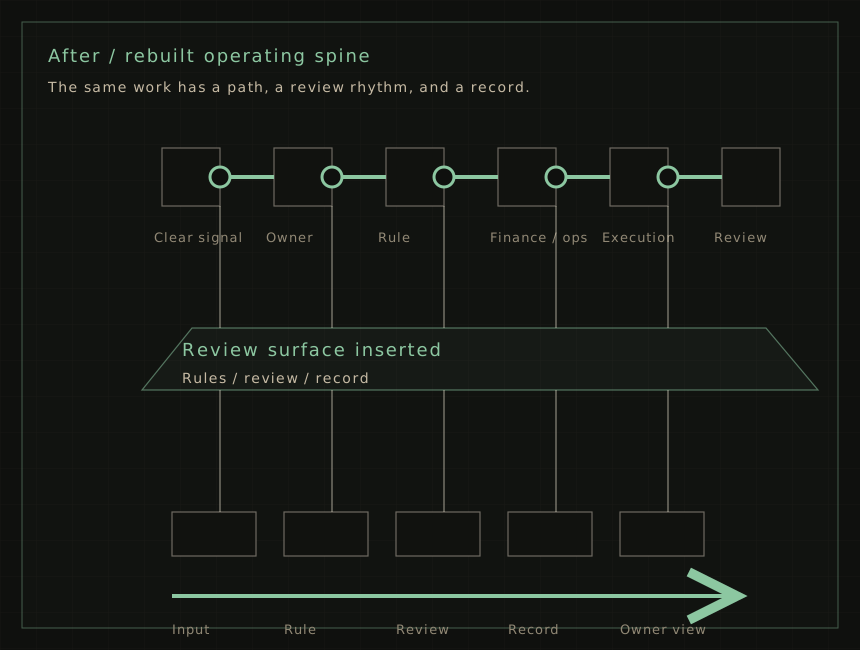
Most of the operating work I find inside growing businesses was never designed on purpose. A spreadsheet that became month-end close. A WhatsApp group that became the operating system. A finance team that grew with outlet count because nobody ever stopped to ask why.
Nobody built a broken process on purpose. The first move on every engagement is to decode the work: sit with the team, watch how things actually happen, ask why it ended up this way.
The second move is to give people their time back. The four hours of manual keystrokes should run overnight. The owner should read the business every morning, not weeks late. The finance team should do the work an accountant should actually do, not data entry.
The third move is to leave. Your team runs the system without me. It's a design constraint, not a slogan.
How I think about this work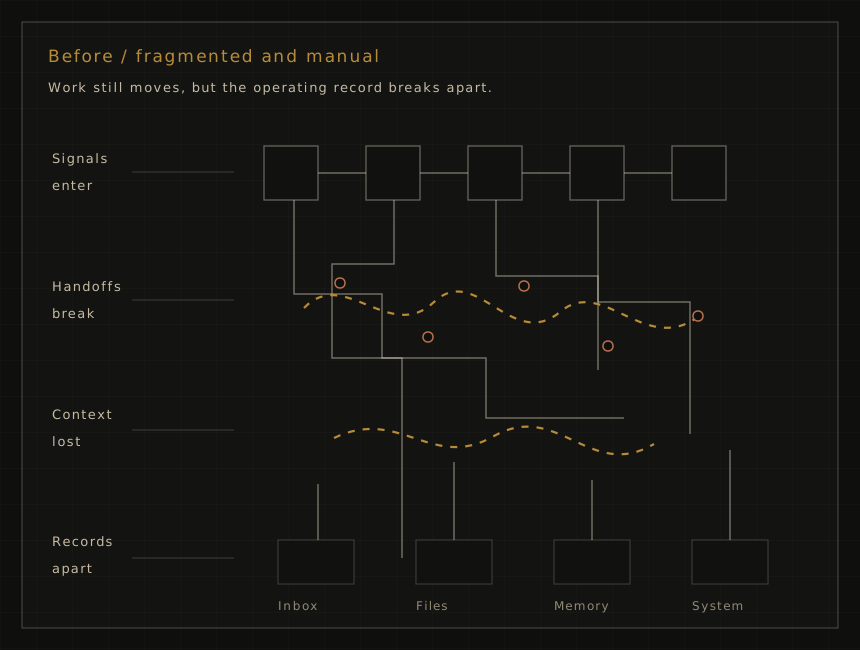
How the work gets done
Some owners want transfer: train the team, step back. Some want operate-with: stay deep, be the go-to operator, extend where the business expands. Both shapes are real, and both are priced the same.
The work shows up where the business needs it: restaurant reconciliation, invoice controls, industrial catalogue systems, or channel buildout.
The migration runs while the team is learning the new tool. The team learns on the live process, not in a slide deck.
Transfer mode trains the team and steps back. Operate-with mode keeps one trusted operator deep in the business. Same price, different operating role.
That is when the way of working has actually shifted. The unit of value is a live system the team can use, not a deck.
Strong team that wants to learn fast: transfer. Lean team that wants one trusted operator in the work: operate-with.
I work alongside the internal team, then step back as they internalise the new way of working. Best for owners with a strong internal team, or owners who want to build one.
Worked example: a premium 13-outlet F&B group migrated off a legacy automation platform in under three months. The next process is now run by the team without us.
I stay deep in the business as the go-to operator. Best for owners with a lean team who want one trusted person across systems, vendors, and geographies.
Worked example: a US manufacturer-distributor on a quarterly engagement - brand, new public website, full SKU catalogue, lead-to-fulfilment spine, factory-direct buyer maths, D2C storefront, market expansion, and channel buildout - all shipped solo in the first sprint.
Engagement options
Start with the smallest useful decision: is there a real operating problem worth fixing? From there, move into an embedded operator rhythm or a larger fixed build, depending on whether you need ongoing operating capacity or one specific system handed over.
Business Assessment
Forward-Deployed Operator
Install & Exit Build
First 14 Days
Kickoff / day in the life / build / review
Goals, constraints, calendar, current reporting rhythm, and the decisions the owner cannot see clearly enough today.
Sales, ops, floor, production, finance, and owner review. I look upstream where the chaos starts, not only where it lands.
Where the work is leaking, what a 60-day shape would look like, and where the quickest margin-visibility win is.
The first system in production, usually a margin-visibility or follow-up reliability win the owner can see by Friday.
What landed, what is next, and whether the shape of the engagement should change.
First step is the paid Business Assessment. If there is nothing worth fixing, the report is yours and we end there. No pressure to take it further.

About
I am Erwin Choo. I spent 13 years at a leading Asian private equity firm as Portfolio Director, working across portfolio operations and value creation. erchoo.com is where I now apply that operating discipline to growing businesses now. Building the systems they need, not selling slide decks.
In the 13-outlet F&B engagement, adding outlets became configuration and process discipline instead of another finance hire.
At a separate portfolio company, one decisive operating call created roughly USD 20M in enterprise value.
Six Sigma Black Belt, IMLP graduate, MES rollout across 6 plants in 4 countries, USD 1M+ annualised savings, Korea Oracle ERP with USD 616K in benefits, and two GE Plastics Management Awards.
Performance Improvement, promoted through Associate Director, 5-year strategic plan for a government regulator, and PMO for a major Malaysian telco transformation.
Vice President, Performance Improvement Head. Rebuilt the function into the Consumer Bank internal consulting and PMO unit.
Portfolio Director across 22+ portfolio companies and roughly USD 2B aggregate enterprise value, 25+ countries. Embedded 9 years as Group CIO then CTO of one portfolio company; Core Team on its roughly 6x exit at unicorn valuation, IRR above 20%. Cash cycle 30 days to 2 days. 10 acquisitions integrated into one stack. At a separate portfolio company, one operating call created roughly USD 20M in enterprise value.
Operating vehicle behind erchoo.com. Current work includes a quarterly manufacturer-distributor engagement, continuing relationship support for a premium 13-outlet Singapore F&B group, and a deliberately small engagement load: four slots per quarter.
Tools brought early
Brought a leading RPA platform to a premium 13-outlet F&B group when Southeast Asian F&B was still spreadsheet-driven.
Brought a modern RPA and parsing-grade extraction stack to the same group. Migrated off the legacy platform in under three months.
Brought parsing and verification into invoice operations for a regional PE fund. Banking-detail fraud guardrails and payment-file workflow are in production.
Brought an industrial-grade web stack and controlled engineering-diagram pipeline to a US manufacturer-distributor. Brand, website, SKU catalogue, lead-to-fulfilment spine, demand-sensing, pricing intelligence, and channels built single-handed.
FAQ
Fit / terms / ownership / handover
The standard shape is a 3-month minimum, then month-to-month with notice. Three months gives enough runway to ship a full operating cycle instead of a cosmetic fix.
A written report that names the leaks, the first 60-day fix sequence, where automation is worth using, and whether a Forward-Deployed Operator engagement makes sense.
Yes. The assessment is yours. There is no obligation to convert into an engagement if the problem is too small, the timing is wrong, or the fit is not there.
Both modes are real. Transfer mode trains your team and steps back. Operate-with mode keeps me deep in the work as your go-to operator. We choose based on your team and preference.
Yes. Erwin delivers the assessment, the weekly review, and the core build direction personally. If specialist help is ever needed, it is discussed first.
The client owns the deliverables built for the business. SS33 may publish anonymised case studies only where confidentiality allows it.
ASEAN and ANZ are the natural base. Regional travel is possible when the work needs on-site operating context.
Then the Business Assessment ends there. The value is the clarity: what not to build, what to leave alone, and what would be a poor use of money.
Are these familiar?
Get in touch
In 30 minutes I will tell you whether there is a real operating problem to fix, where I would start, and whether a Business Assessment is worth your money.